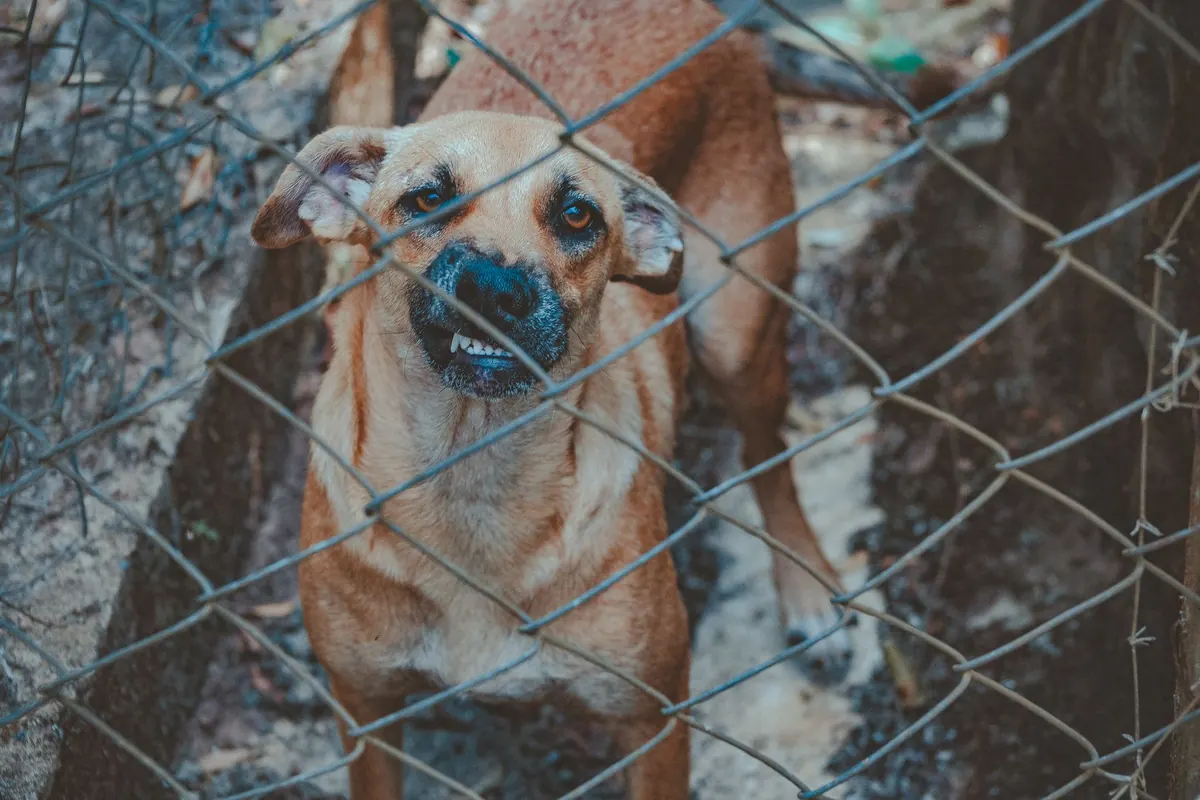
A dog bite is not just a wound. It is a scar your child sees every morning, a neighbour you still have to live beside, and an insurance company explaining why none of it is worth much. Jose Robles Jr is an Air Force combat veteran who handles dog attack claims across Richardson and Dallas County.
A Richardson dog bite lawyer pursues compensation for medical treatment, scarring and distress after an attack. Texas has no law making owners automatically responsible, so a claim is built either on the owner knowing the dog was dangerous or on their failure to control it. Payment usually comes from home insurance. Free consultation, no fee unless we win.
How does a Texas dog bite claim actually work?
Down one of two routes. Either the owner already knew the dog was dangerous, or the owner was careless in controlling it. You only need one of them.
Texas does not have a law making dog owners automatically responsible the way some states do. What it has is a long-settled principle from its courts: an owner is responsible when the animal had shown dangerous tendencies and the owner knew, or had good reason to know, about them.
Notice what that actually asks for. Knowledge, not a bite. An owner who put up a warning sign, muzzled the dog around visitors, kept it shut away when people came round, apologised to a neighbour after a previous lunge, or already has a complaint on file has shown they knew, without anyone ever having been bitten before.
Two ways to prove a Texas dog bite claim
Either route can succeed on its own. How Texas courts decide who is responsible for a dog attack.
The owner already knew
The dog had shown it was dangerous and the owner knew or should have known. A previous bite is the clearest proof, but so is a warning sign on the gate, a muzzle, a neighbour who was snapped at last year, or a complaint already sitting with animal services.
The owner was careless
No previous bite needed. A gate that never latched properly, a dog off its lead where leads are required, a tie-out long enough to reach the footpath, or a landlord who ignored a hazard they knew about. This is the route most claims actually run on.
Richardson dog bite lawyers will usually build on the second route, because carelessness is far easier to document than a secret the owner kept.
Dog attacks cause two kinds of harm, and only one of them is visible. Bite injuries heal; the emotional trauma of being attacked often does not, particularly for children who become frightened of every dog they meet afterwards. Injury lawyers who handle dog bites regularly document both, because a claim built on the physical wound alone undervalues what victims actually live with. A gate that did not latch, a dog running loose in a park where leads are required, or a chain long enough to reach the pavement are all failures to control an animal, whether or not that dog had ever shown its teeth before.
What should you do in the first days after an attack?
Get treated, report it to Richardson Animal Services, find out who owns the dog and exactly where it happened, and photograph the wounds as they heal rather than only on day one.
That last point surprises people. A scarring claim is valued on the permanent result, so a documented record of how the healing went matters more than one dramatic photograph taken in an emergency room.
What matters, and when
SAME DAY
Get medical treatment. Puncture wounds close over bacteria, and infection is the most common complication of a bite that looked minor. Photograph the wounds before they are dressed.
WITHIN A DAY
Report the attack to Richardson Animal Services. That report creates the official record and starts the observation period for rabies.
FIRST WEEK
Get the owner's name and the exact address where it happened. Home or renter insurance usually pays these claims, and you cannot find the policy without the address.
FIRST MONTHS
Photograph the scarring as it heals, on a schedule. Disfigurement is valued on the permanent result, not on the emergency room photo.
2 YEARS
The Texas deadline to file. For a child, the clock usually pauses until they turn 18.
Reporting the attack matters for a reason beyond your own claim. Texas has a formal process for declaring a dog dangerous, and that process depends on incidents being officially recorded. The report you make today is the documented history in somebody else's case next year.
Where do Richardson dog attacks happen?
Mostly in three places: residential streets, apartment complexes, and the city's parks and trails.
Richardson is a city of established neighbourhoods with fenced back gardens, and a great many bites happen at or just outside a front gate, to a delivery driver, a meter reader, a visiting friend or a child playing next door. The pattern is nearly always the same: the dog was contained until the moment it was not.
Apartment complexes are the second cluster, particularly the larger ones along the US-75 corridor. These bring an extra question worth asking, because a landlord who knew about a dangerous animal on the property and did nothing can sometimes be part of the claim alongside the tenant who owns it.
The third is the parks and the trail network. Breckinridge, Cottonwood and Huffhines all draw dog walkers, and an off-lead dog where leads are required is close to the clearest example of the careless-control route there is. These are also the accidents most likely to have witnesses, which matters more than people expect.
Whichever route a claim runs down, a dog bite attorney has to pin down the financial side early: what treatment has cost, what future surgery might cost, and what insurance exists to pay for it.
If you have been told there is no insurance behind the dog, that is worth checking rather than accepting. It is not always accurate, and it is rarely something an injured person can verify alone.
Why work with Jose Robles Jr after a dog attack?
You talk to the lawyer handling your case, not a rotating queue of case managers. That is the whole model of this firm.
Jose Robles Jr is a decorated Air Force combat veteran with a 95% success rate, $5M+ recovered, 1,000+ cases handled, and a 4.9 star Google rating.
Before becoming a personal injury lawyer, Jose "Joe" Robles Jr served nearly 15 years as an Air Force Military Police officer, including four combat tours in the Middle East, and earned his law degree from Texas A&M University School of Law. He then spent four years at Bailey & Galyen, rising to Managing Attorney of the Pre-Litigation Personal Injury Department, before founding this firm.
Dog bite claims are smaller than a catastrophic crash case, and bigger firms treat them accordingly. A family in Richardson worrying about a child's scar can get a straight answer here without being routed into a queue, and the firm works in English and Spanish.
Nothing upfront. Dog bite claims run on a contingency fee, which means the lawyer takes a share of what is recovered and nothing at all if the claim does not succeed. The agreement has to be in writing and has to spell out how the fee is worked out. Ask separately about case costs, which cover things like getting medical records, because those are handled apart from the fee. The first conversation is free either way.
Is it worth suing for a dog bite?
It depends on the injury and on whether there is insurance. A bite that needed cleaning and a tetanus shot, with no lasting mark, may not justify a claim. A bite that needed stitches or surgery, left a visible scar, became infected, or happened to a child usually does, because those carry disfigurement and distress that outlast the wound. Most claims are paid by a home or renter insurance policy rather than by the owner personally, which is worth knowing before you decide.
What is the average settlement for a dog bite?
There is no meaningful average, and a figure quoted before anyone has read your medical records is marketing rather than analysis. What decides it is specific: how deep the wounds were and where on the body, whether surgery or reconstruction is needed, how the scarring settles, whether nerve damage or infection followed, the work you missed, and the psychological effect, which is substantial in children. The insurance available matters as much as the injury does.
How much compensation can I get for a dog bite?
Texas lets you claim for medical treatment including any future surgery, income you lost, physical pain and mental distress, lasting physical limits, and visible scarring. Dog bite claims are unusual in how heavily those last two weigh, because the injury is often on the face or arms and does not fully fade. Nobody can put a number on it before seeing your records and knowing how the scarring has healed.
Does Texas really have a one bite rule?
Yes, but the name misleads people in both directions. A dog does not get one free bite: a previous bite is only the most obvious way to show the owner knew the animal was dangerous, and growling, lunging, an escape, or a beware of dog sign can do the same job. It also does not block a claim for a first bite, because carelessness in controlling the dog is a completely separate route that needs no history at all.
Who actually pays a Richardson dog bite claim?
In most cases a home or renter insurance policy, not the owner out of their own pocket. That changes how people feel about making a claim, because the dog usually belongs to a neighbour, a friend or a relative and it feels like an attack on a person. In practice an insurance company handles it. Some policies exclude particular breeds or exclude animal claims entirely, so what cover exists is something to check early rather than assume.
My child was bitten. Is anything different?
Two things. Children are bitten on the face and head far more often than adults simply because of their height, which raises the scarring and future surgery parts of a claim considerably. And the deadline works differently: for a child, the two year clock usually pauses until they turn 18. Waiting is still a bad idea, because witnesses move and animal service records age, but the deadline itself is not the immediate pressure it would be for an adult.
Injured? You Deserve a Fighter in Your Corner.
No fee unless we win. Call us now or schedule your free consultation online.